
Most of us see things around our homes that just need to be fixed. Some of them are a priority, needing immediate attention, and some will be dealt with when we get around to them. It’s that way in life and it is that way in the Lord’s work. Recently I have been watching newscasts about what is happening in California. For the past forty plus years that state has been on a steady downhill slide by any metric you would pick. The streets of its major cities are covered with everything imaginable. The crime is through the roof, the homeless don’t just sleep in parks and under bridges, but in libraries and public buildings. It is not only California and her cities; it is rampant in just about every big city in the nation. Opposition seems to always stand in the way of civic minded people with solutions that may or may not work, because those solutions threaten their cash cows and positions. These problems aren’t new. Today, I want you to take a trip back in time with me. Get your Bible and look at Nehemiah. There are three quick thoughts about Nehemiah and what he did when something had to be done.
The story we will look at takes place a little less than 2500 years ago. Nehemiah was written between 445 BC and 420 BC. Persia, modern Iran, is the world power and their king is a man named Artaxerxes. The most well-known of the Persian kings was a man named Cyrus. He was the one that decreed the Jewish captives, from the time when the Babylonians conquered Israel, could go home. Approximately 50K did. But that was a hundred years earlier. Those who returned were to rebuild the Temple. Their leader was Zerubbabel. Later Ezra, the scribe, would lead a second group back to Israel, leading the people religiously. Our focus today though is the next leader, Nehemiah. He isn’t a preacher or religious leader; he is a government worker in Shushan over 1000 miles away from the city of Jerusalem. He is the king’s cupbearer. His job was to protect Artaxerxes from being poisoned. He tasted and drank the king’s food, protecting him from assassination. He found out about a massive problem way back in Israel. He had personally never even been to Jerusalem, but his parents had been likely taken captive and told him of the glories of “The Land.” As a little boy he dreamed about that place of “milk and honey” where God had met with His people. So, how did he learn about the problem? The first three verses of the book lay it out for us. It began in the month of Chisleu, roughly our November-December, when some of his fellow Jews who had been to Jerusalem told him about the walls of the city. They were broken down and the gates were burned. His dreams were crushed. What does he do?
1. He Sat Down and Wept (1:4). When Hanani and the others told him of the destruction it broke his heart. There are times when the Lord places a burden on us for specific problems. There are hundreds of problems that the Lord may burden us about. He may touch one heart about a certain missionary and another heart to teach a Sunday School class. There could be a burden to help with a financial need of the church or the burden to help with manual labor needed on the church campus. The need to see spiritually is huge. The heart to feel the burden is mandatory. The burden he felt drove him to our second thought.
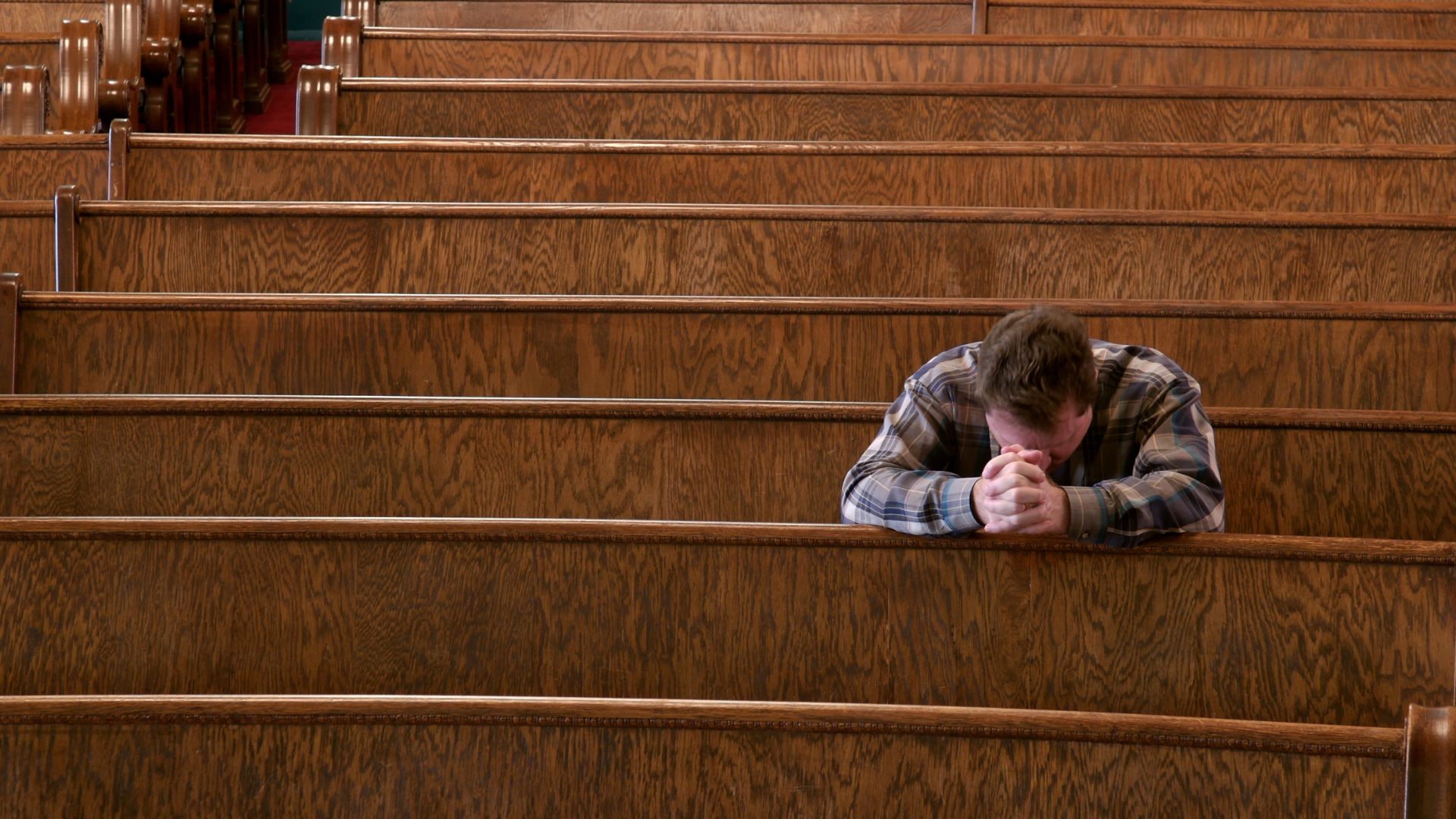
2. He Knelt Down and Prayed (1:4b-11). We won’t walk verse by verse through his prayer but suffice to say before he ever began asking the Lord for his desires, he knew his heart was to be clean of sin before the Lord (v.6-7). That is a truth we all must remember. For fellowship with the Lord, we must be clean. Psalm 66:18, “If I regard iniquity in my heart, the Lord will not hear me.” He also didn’t pray this prayer once. It was over and over again. All of this began in Chisleu (November/December) and it lasted until Nisan (March/April). He had been praying for four months. What a wonderful example for us to not be weary in well-doing. We pray and when we think we have prayed enough, we pray some more.
3. He Stood Up to Work (2:1-11). There comes a time when burden is to be acted upon and the prayers now have feet to them. I heard a humorous story years ago about a maid that worked for a rich lady. Both the women were Christians. The wealthy lady asked the maid to pray with her about a certain saloon where men in the community would drink their money away, leaving their wives and children without basic necessities such as food and clothing. A day or so later the wealthy lady heard the news that the saloon had burned to the ground during the night. She was ecstatic. Her maid was working away when the lady came running “Oh, the Lord answered our prayers last night.” “I know” replied the maid. “How do you know?” the wealthy lady asked. “I put feet to my prayers” was her answer. When the Lord burdens you that is wonderful. When you pray about the problem you are burdened with, wonderful. But there comes a time when the work needs to begin.
Nehemiah is a wonderful example to the laity. He had no ministerial calling but is a classic example of God taking a regular saint and doing great things with him or her. What problem or problems has the Lord burdened you with. What do you plan to do about it? The needs are great and you might be just the right person for the Lord to use for victory in the great pursuit of spreading the gospel.